
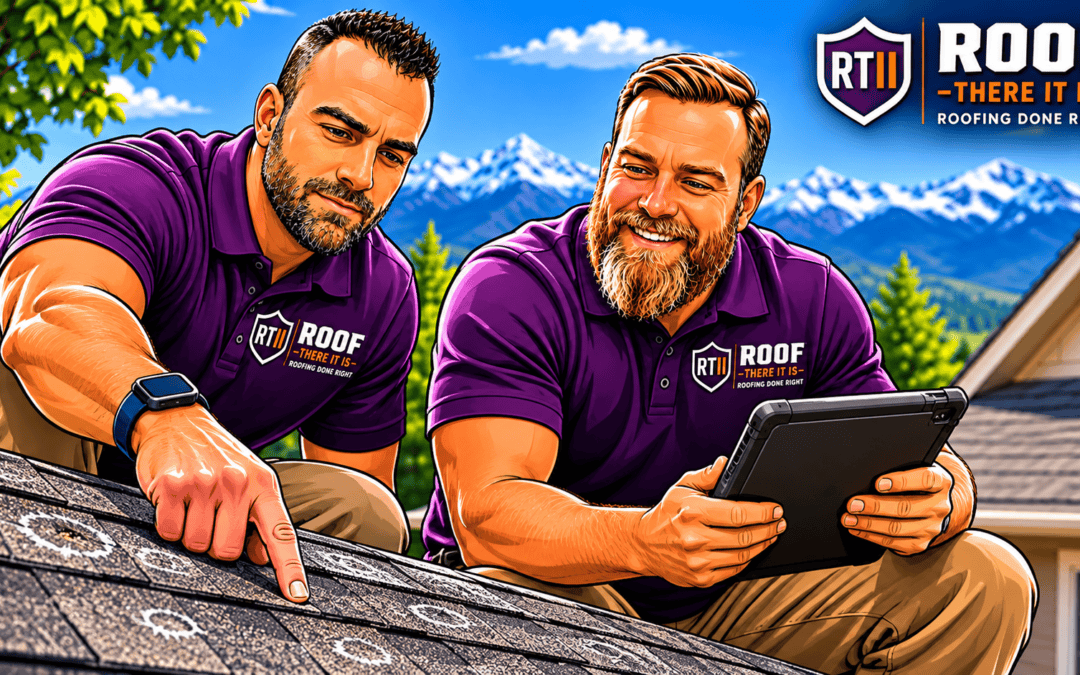
What 15+ Years of Colorado Roofing Experience Means for Homeowners
With more than 15 years of Colorado roofing experience, we’ve learned that building a roof that lasts requires more than quality shingles. Between intense sunlight, damaging hailstorms, heavy snow, high winds, and dramatic temperature changes, roofing systems across the Front Range face conditions that can shorten their useful life.
A roof’s long-term performance depends on much more than the shingles installed on top of it.
At Roof There It Is (RTII), our approach is built around the lessons we’ve learned through years of roofing operations, inspections, repairs, and replacements throughout Colorado.
Today, we’re sharing seven of the most important lessons we’ve learned about building roofing systems that last.
Table of Contents
- Colorado’s Climate Demands More From a Roofing System
- The Quality of Installation Matters as Much as the Shingle
- Not Every Roof With Hail Damage Needs to Be Replaced
- A Thorough Roof Inspection Can Prevent Expensive Surprises
- A Complete Roofing System Is More Important Than Any Single Product
- Local Building Requirements Matter
- Trust Is Built Through Honest Recommendations and Accountability
1. Colorado’s Climate Demands More From a Roofing System
Colorado presents roofing challenges that aren’t always found in other parts of the country.
Along the Front Range, homeowners regularly experience a combination of weather conditions that can affect roof performance.
These include:
- Hailstorms: Hail can damage shingles, metal components, flashing, vents, and other roof accessories.
- High winds: Strong winds can lift improperly secured shingles and expose weaknesses in roof edges and flashing.
- Intense ultraviolet exposure: Colorado’s elevation contributes to strong solar exposure that can accelerate the aging of roofing materials.
- Snow and ice: Snow accumulation, freeze-thaw cycles, and ice dams can create moisture-related problems.
- Rapid temperature changes: Expansion and contraction can place additional stress on roofing materials and components.
The National Weather Service provides forecasts, warnings, and educational information about severe weather conditions affecting Colorado homeowners.
One of the biggest lessons we’ve learned is that a roofing system must be selected and installed with these regional conditions in mind.
A product that performs adequately in a milder climate may not be the best choice for a home along Colorado’s Front Range.
Our approach: We evaluate the home’s location, roof design, ventilation, exposure, and existing roofing conditions before recommending materials or repairs.
2. The Quality of Installation Matters as Much as the Shingle
Homeowners frequently ask us which roofing shingle is the best.
It’s a reasonable question, but the answer involves more than selecting a particular manufacturer or product line.
Even a high-quality asphalt shingle can experience premature problems when installed incorrectly.
Over the years, we’ve seen how important proper installation practices are to the performance of a complete roofing system.
Critical details include:
- Correct shingle placement and exposure.
- Proper fastening methods and nail positioning.
- Appropriate starter shingles along roof edges.
- Properly installed drip edge and flashing.
- Adequate underlayment and ice-barrier protection.
- Correct ridge-cap installation.
- Proper attic ventilation.
These details aren’t always visible from the ground, but they can have a significant impact on a roof’s long-term performance.
At RTII, we emphasize the complete roofing system rather than focusing exclusively on the shingles.
Why This Matters for Colorado Homeowners
When strong winds or severe weather arrive, small installation deficiencies can become significant problems.
Improperly secured shingles may be more vulnerable to wind damage. Poor flashing details can create pathways for water intrusion. Inadequate ventilation can contribute to heat and moisture problems inside the attic.
Homeowners considering a new roofing system can learn more about our Colorado roof replacement services and the installation components we use.
The lesson: A roofing system is only as dependable as its materials, installation practices, and attention to detail.
3. Not Every Roof With Hail Damage Needs to Be Replaced
Colorado homeowners are familiar with hailstorms and the insurance claims that sometimes follow.
However, one of the most important lessons we’ve learned is that not every storm-damaged roof automatically requires a complete replacement.
The appropriate solution depends on the actual condition of the roof.
During an inspection, we evaluate factors such as:
- The type and severity of damage.
- The location and distribution of affected shingles.
- The age and general condition of the roofing system.
- Whether individual repairs can restore the affected areas.
- Whether replacement is necessary to address widespread damage.
- Applicable building codes and manufacturer installation requirements.
Sometimes, a targeted roof repair in Colorado is the appropriate recommendation.
Other times, the extent of the damage or the condition of the existing materials makes replacement the more practical long-term solution.
We believe homeowners deserve an explanation of the findings before making a significant financial decision.
Why Documentation Matters
A proper inspection should include photographs and clear documentation of relevant conditions.
This helps homeowners understand what was observed and gives them useful information when discussing potential insurance coverage with their carrier.
A roofing contractor can document physical conditions and provide repair recommendations, but insurance coverage decisions remain with the insurance company under the applicable policy.
Homeowners who suspect storm damage can learn more about our Colorado hail damage roof inspection process.
The Insurance Institute for Business & Home Safety (IBHS) also conducts research on hail, wind, and roofing system performance.
The lesson: Inspect first, document the findings, and recommend the work the roof actually needs.
4. A Thorough Roof Inspection Can Prevent Expensive Surprises
A roof may look acceptable from the ground while having problems that are difficult to see without a closer evaluation.
That’s one reason we’ve developed the RTII 49-Point Roof Inspection Process.
Our inspection approach is designed to evaluate important roofing components and identify visible conditions that may affect performance.
Depending on the property, accessibility, and inspection method, we examine areas such as:
- Shingle condition and visible wear.
- Evidence of hail or wind damage.
- Roof penetrations and pipe boots.
- Flashing around chimneys and roof transitions.
- Ridge caps and roof edges.
- Visible ventilation components.
- Gutters and drainage conditions.
- Signs of previous repairs.
- Potential water-entry points.
- Other accessible roofing components.
The objective isn’t simply to identify whether a homeowner needs a new roof.
It’s to provide a clearer understanding of the roofing system’s current condition.
Why We Believe Inspections Should Come First
We’ve learned that homeowners make better decisions when they understand the condition of their roof before beginning repairs, replacements, or insurance discussions.
An inspection can identify maintenance opportunities, document existing damage, and help establish whether additional evaluation is necessary.
Homeowners can schedule a free roof inspection in Colorado to better understand their roof’s condition before deciding what to do next.
The lesson: A thorough inspection is the foundation of an informed roofing decision.
5. A Complete Roofing System Is More Important Than Any Single Product
When homeowners think about a new roof, they usually picture shingles.
But shingles are only one component of the roofing system.
Over years of roofing work, we’ve learned that long-term performance depends on how individual components work together.
That’s the philosophy behind the RTII Roof Guard System.
Our roofing approach considers the major components required to create a dependable roofing assembly.
Underlayment
Synthetic underlayment provides an additional layer of protection beneath asphalt shingles when properly installed.
Ice and Water Protection
Self-adhered ice-barrier membranes provide additional protection in vulnerable locations, such as certain eaves, valleys, and penetrations, as required by the roof design, applicable codes, and installation specifications.
Starter Shingles
Starter products help establish secure roof edges and support wind resistance when installed according to manufacturer requirements.
Drip Edge
Properly installed drip edge helps direct water away from vulnerable roof edges and into the intended drainage path.
Ridge Caps
Purpose-designed ridge-cap shingles protect roof peaks and contribute to the finished roofing system.
Ventilation
A properly designed attic ventilation system can help manage heat and moisture accumulation, depending on the home’s attic configuration.
Each component has a purpose.
When one component is missing, poorly selected, or incorrectly installed, the overall roofing system may be compromised.
The lesson: Don’t evaluate a new roof based on shingles alone. Evaluate the complete system being installed.
6. Local Building Requirements Matter
Another lesson we’ve learned is that roofing requirements can vary significantly between jurisdictions.
Colorado municipalities and counties may adopt different editions of building codes or establish local amendments that affect roofing projects.
Requirements can involve:
- Permits and inspections.
- Underlayment and ice-barrier installation.
- Roof ventilation.
- Wind-resistance specifications.
- Material classifications.
- Roof slope and installation limitations.
- Flashing and drainage details.
For example, requirements in Fort Collins may differ from those in Denver, Colorado Springs, or other Front Range communities.
Homeowners should not assume that every roofing contractor follows the same installation requirements across every jurisdiction.
At RTII, we believe verifying the applicable requirements before installation is an essential part of responsible roofing work.
Expanding Our Experience Into Southeastern Wyoming
As RTII serves homeowners in Cheyenne and Southeastern Wyoming, the same principle applies.
Wyoming’s wind exposure, seasonal weather, and local building requirements deserve careful attention.
Roofing recommendations should reflect the conditions and requirements of the actual property rather than relying on a one-size-fits-all approach.
Learn more about our roofing services in Cheyenne, Wyoming.
The lesson: Local knowledge and code awareness are important parts of roofing expertise.
7. Trust Is Built Through Honest Recommendations and Accountability
After years in the roofing industry, one lesson stands above the rest.
Homeowners need a roofing contractor they can trust to recommend the right solution, perform quality work, and stand behind the results.
A roof replacement is a significant investment.
Most homeowners don’t replace roofs frequently, and many aren’t familiar with roofing terminology, insurance procedures, or installation requirements.
That creates a responsibility for contractors to communicate clearly.
At RTII, our philosophy centers on several principles:
Inspect before recommending. Understand the roof’s condition before determining whether repair or replacement is appropriate.
Explain the options. Help homeowners understand the advantages, limitations, and costs of available solutions.
Use appropriate materials. Recommend roofing products and systems suited to the property and regional conditions.
Focus on installation quality. Recognize that workmanship affects long-term roof performance.
Stand behind the work. RTII backs qualifying roof installations with a Lifetime Workmanship Warranty, subject to the written warranty terms.
We believe roofing should be approached as a long-term responsibility rather than simply a transaction.
What Our Experience Means for Colorado Homeowners
Over more than 15 years in the roofing industry, we’ve seen how much difference proper planning, product selection, installation quality, and honest communication can make.
We’ve also learned that no roofing system is completely immune to Colorado’s severe weather.
Even properly installed, impact-resistant roofing products can sustain damage during sufficiently severe storms.
That’s why our focus isn’t on promising a roof that will never experience problems.
It’s on helping homeowners make informed decisions and building roofing systems designed to perform under the conditions they’re likely to face.
Whether we’re inspecting an older roof, evaluating hail damage, completing repairs, or installing a new roofing system, our goal remains the same:
Roofing Done Right.
About the Roofing Professionals Behind RTII
Roof There It Is is co-owned by Justin Wisdo and Terrance McFarlan, two roofing professionals with extensive experience in residential roofing and restoration operations.
Justin previously held senior operational leadership roles at a major multistate roofing company, overseeing large-scale roofing operations, installation processes, production teams, and operational quality.
Terrance brings years of hands-on roofing operations and project management experience, including coordinating roofing projects and working directly with homeowners and installation teams.
Together, their backgrounds include involvement in thousands of roofing projects and extensive experience navigating the challenges of residential roof repairs and replacements.
Today, they bring that experience to homeowners throughout Colorado and Southeastern Wyoming through Roof There It Is.
Schedule a Free Roof Inspection With RTII
If you’re concerned about hail damage, aging shingles, roof leaks, or the overall condition of your roofing system, our team can help you better understand your options.
Roof There It Is provides:
- Free roof inspections.
- Hail and wind damage assessments.
- Residential roof repairs.
- Complete roof replacements.
- Roofing system recommendations.
- Roofing services throughout Colorado and Southeastern Wyoming.
Don’t guess about the condition of your roof. Start with a professional inspection.
Schedule Your Free Roof Inspection
Roof There It Is (RTII) — Roofing Done Right.
Educational disclaimer: Roofing conditions, building code requirements, insurance coverage, and manufacturer specifications vary by property and jurisdiction. Recommendations should be based on an inspection of the specific roofing system. This article provides general educational information and is not a substitute for a property-specific assessment.