
Beyond the Shingles: Why Our Roof Inspection Process Matters
Most homeowners picture a roof inspection as a contractor climbing onto the roof, examining a few shingles, and determining whether repairs or replacement are necessary. But a professional roof inspection process should consider much more than the visible roofing surface.
Your roof is an interconnected system. Shingles, flashing, ventilation, underlayment, roof penetrations, and structural conditions can all affect its performance.
At Roof There It Is, we’ve developed RTII FieldScope, a structured 49-point roof inspection and scoping system designed to help our team document roofing conditions, record important measurements, and provide homeowners with clear recommendations.
With more than 15 years of Colorado roofing experience, we understand why a detailed evaluation matters—especially for homes exposed to hail, wind, snow, and extreme temperature changes.
Our goal is simple: Understand the roof before recommending the work.
Table of Contents
- What Is RTII FieldScope?
- Inside Our 49-Point Roof Inspection Process
- How Our Roof Inspection Process Helps Identify Hail Damage
- Does a Detailed Roof Inspection Mean You Need a New Roof?
- Why Detailed Roof Scoping Matters Before Replacement
- What Makes the RTII FieldScope Process Different?
- Colorado Roofing Experience You Can Trust
- Frequently Asked Questions
- Schedule Your Free Roof Inspection
What Is RTII FieldScope?
RTII FieldScope is our structured roofing assessment and documentation system. It organizes 49 inspection and project-scoping items into six categories, giving our team a consistent method for recording observations, photographs, measurements, and relevant construction details. The system includes:
- Interior and attic assessment
- Ground-level property evaluation
- Roof edge and material inspection
- Detailed rooftop evaluation
- Additional documentation and observations
- Inspection summary and review
Depending on the property and purpose of the visit, our team completes the applicable items. Not every inspection requires all 49 elements. By documenting relevant conditions before recommending work, we can better explain our findings and prepare more complete roofing estimates when repairs or replacement are necessary.
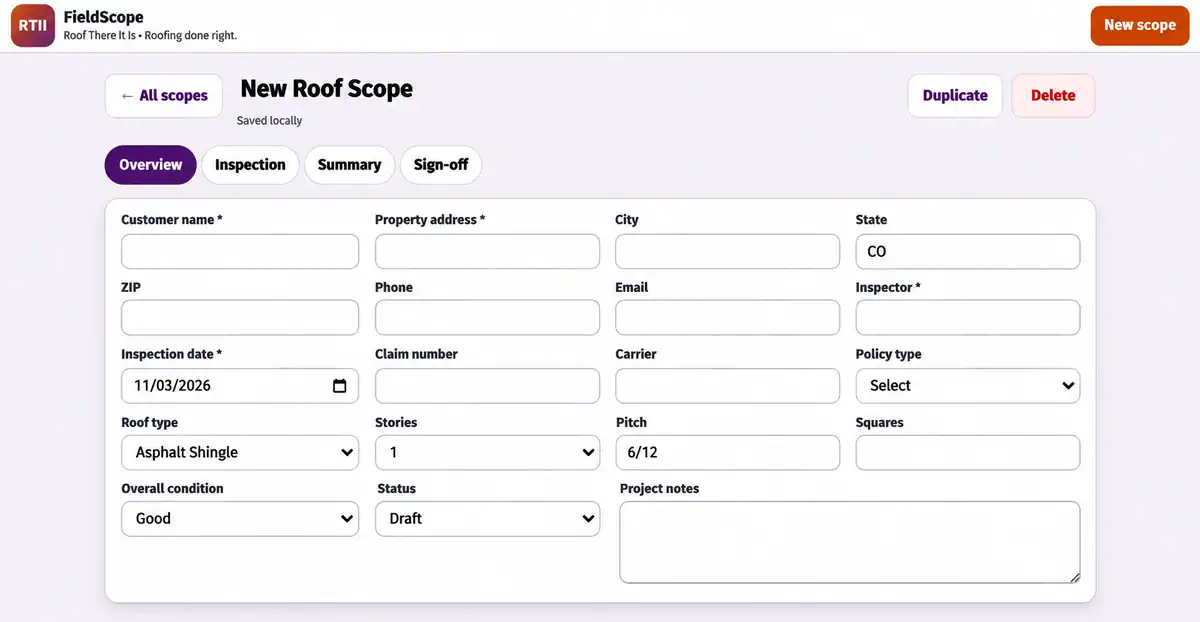
RTII FieldScope organizes property information, roofing conditions, and inspection details into one structured assessment.
Inside Our 49-Point Roof Inspection Process
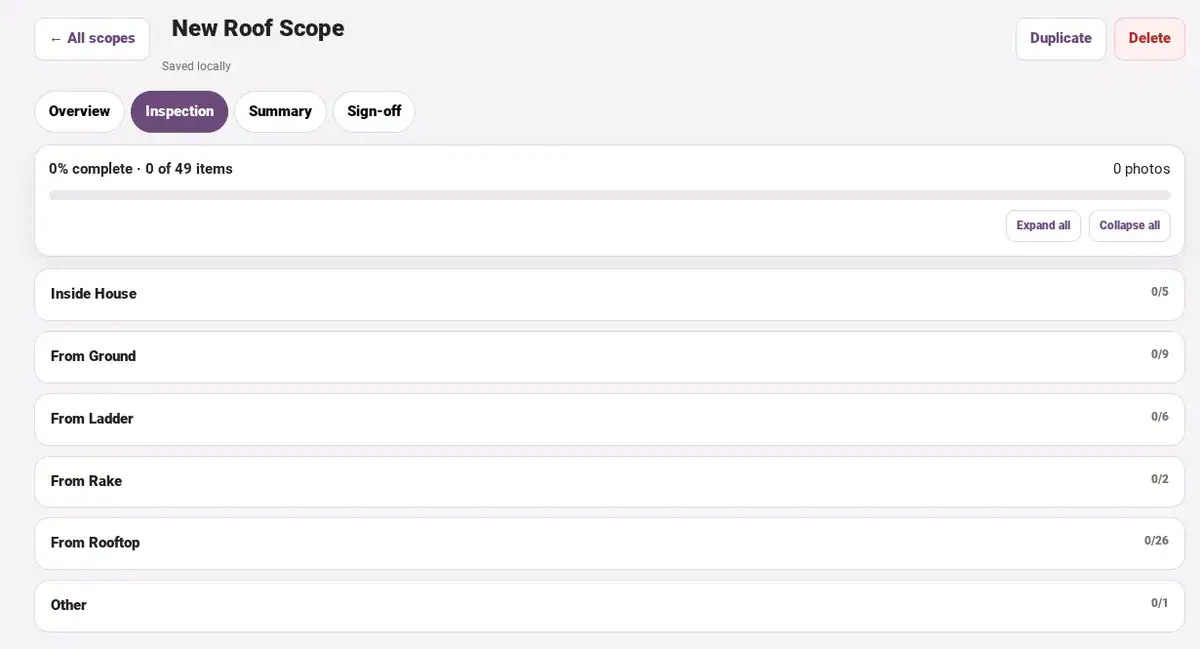
Our 49-point FieldScope system organizes roof inspections into six categories for consistent documentation and assessment.
1. Interior and Attic Assessment
Roofing problems aren’t always visible from outside the home. When accessible and appropriate, our team evaluates interior conditions that may provide additional information about the roof. These can include:
- Drywall cracks or visible interior damage
- Water stains or signs of moisture intrusion
- Attic conditions
- Accessible roof decking
- Areas where moisture-related deterioration may be present
Examining these conditions helps us understand whether a suspected roof problem may already be affecting the interior of the home.
2. Ground-Level Property Assessment
A detailed roofing assessment also considers the property surrounding the home. FieldScope helps our team document:
- Property access and driveway conditions
- Existing exterior damage
- Obstacles affecting roof access or material delivery
- Landscaping and areas needing protection
- Hand-loading requirements
- Soffits and other relevant exterior components
These details are particularly important when preparing for roof replacement. Proper planning helps our team anticipate construction challenges and determine how best to protect the surrounding property.
3. Roof Edge and Existing Material Evaluation
Roofing materials beneath the visible shingles can play an important role in the roof’s long-term performance. When accessible, our team evaluates relevant roof-edge components and existing material conditions. These may include:
- Existing layers of shingles or roofing materials
- Underlayment visible at accessible roof edges
- Ice and water protection where visible
- Valley construction
- Gutter apron and drip edge conditions
- Rake protection
These observations help establish how the roofing system was constructed and identify important considerations for future roofing work.
4. Detailed Rooftop Inspection
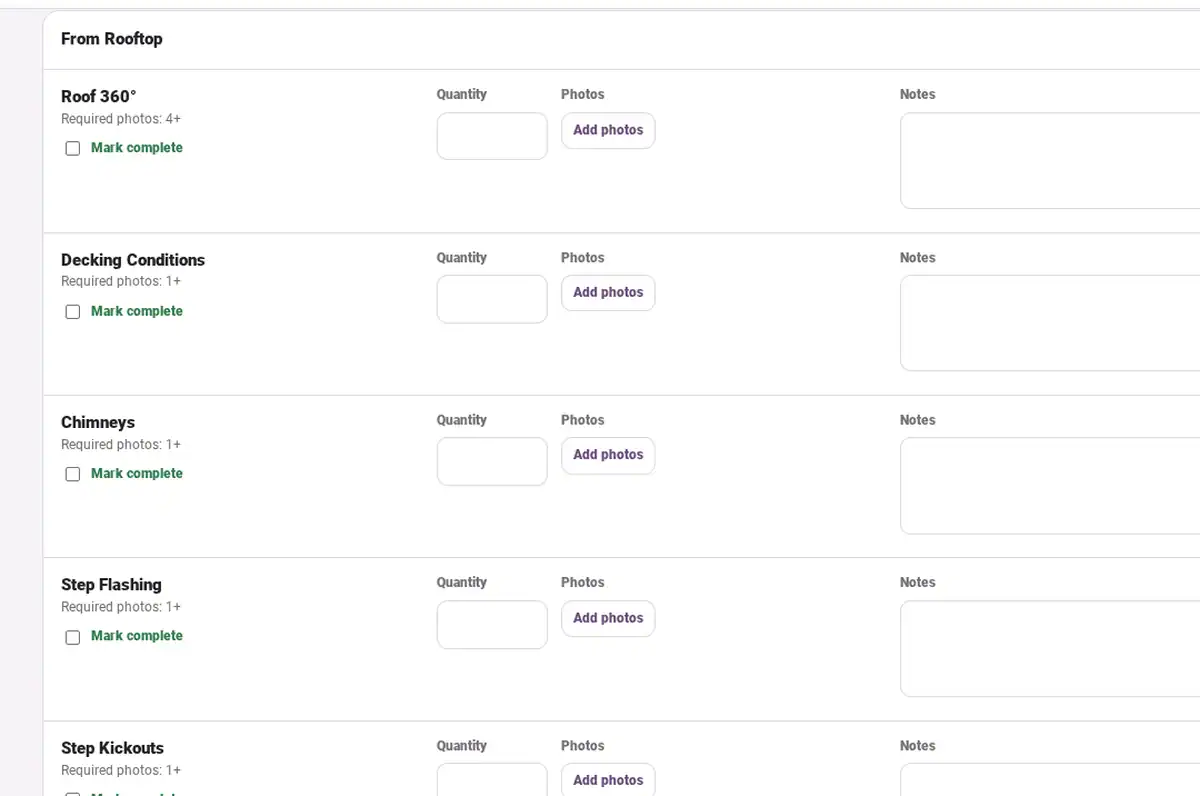
Our detailed rooftop assessment documents roof conditions, flashing, chimneys, and other critical components using photographs and inspection notes.
The rooftop portion of FieldScope contains 26 inspection and scoping items. When safe access is available, our team evaluates relevant roofing components, including:
- Shingles and roof surface conditions
- Roof decking conditions where visible
- Chimneys and chimney flashing
- Step flashing and counter flashing
- Roof-to-wall transitions
- Skylights
- Plumbing pipe boots
- Ridge vents and other ventilation components
- Turbine, box, and round vents
- Kitchen and bathroom exhaust vents
- Other penetrations and rooftop accessories
For properties affected by hail or severe weather, we also examine signs of potential impact damage, wind damage, and related roofing concerns. A complete evaluation considers how these components work together rather than focusing exclusively on the shingles.
5. Photographs, Measurements, and Documentation
One of the most important features of RTII FieldScope is its organized documentation process. For applicable inspection items, our team can record:
- Photographs of roofing conditions
- Measurements and quantities
- Inspector observations
- Notes about existing damage
- Details relevant to repair or replacement planning
This information helps create a consistent record of the conditions observed during the assessment. Documentation also supports clearer communication when explaining roofing recommendations to homeowners.
6. Inspection Summary and Review
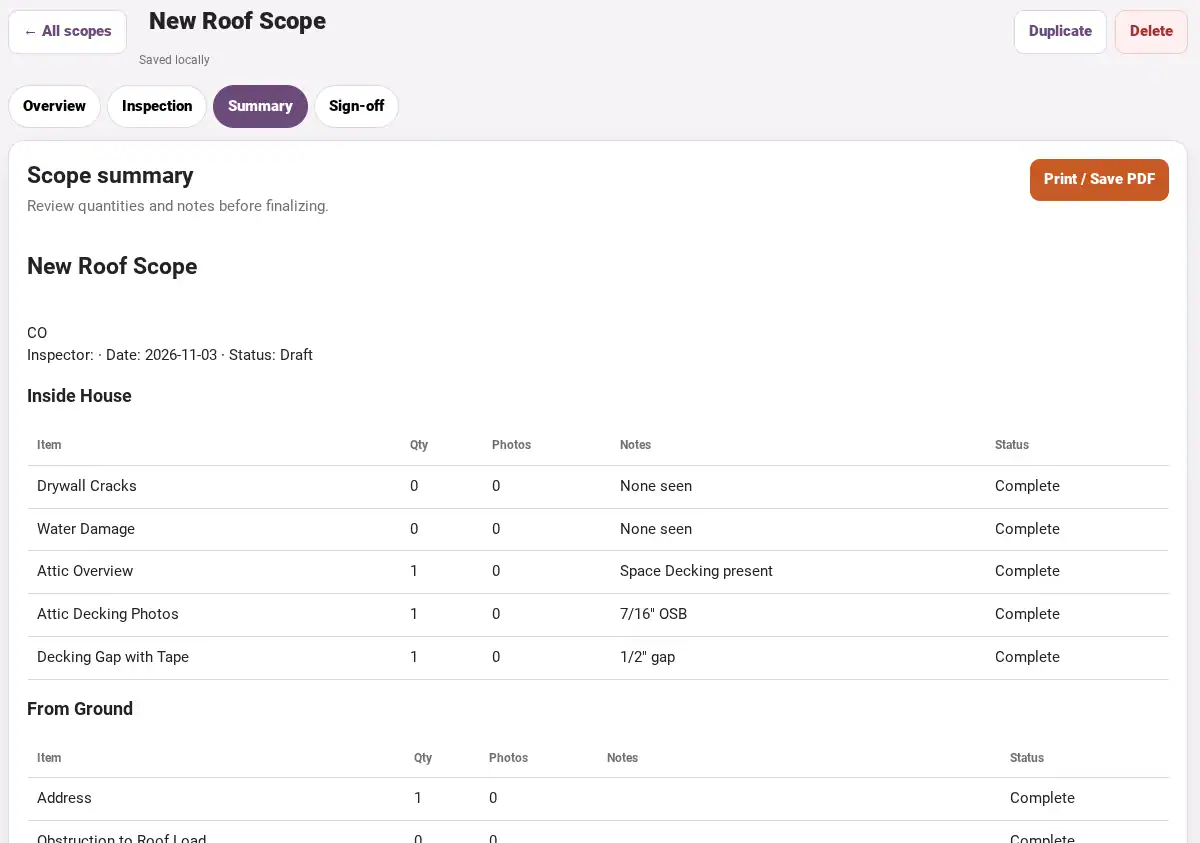
RTII FieldScope organizes inspection findings, photographs, measurements, and notes into a structured summary to support clear roofing recommendations.
Once the applicable evaluation is complete, FieldScope can generate an organized summary of recorded observations, measurements, and notes. The system also supports PDF reporting and inspector or homeowner sign-off when appropriate. Our team can use the findings to explain the roof’s condition and discuss potential next steps. We believe homeowners should understand why roofing work is being recommended—not simply be told they need a new roof.
For additional information about hail damage and roofing material performance, homeowners can explore research from the Insurance Institute for Business & Home Safety (IBHS).
How Our Roof Inspection Process Helps Identify Hail Damage
Colorado hailstorms can affect roofing systems in different ways. Some roofs sustain functional damage, while others may experience minor cosmetic impacts or no significant damage at all. During a hail damage evaluation, we consider relevant conditions such as:
- Impact marks or bruising on asphalt shingles
- Cracked or fractured roofing materials
- Localized granule displacement
- Dents to roof vents or metal components
- Damaged flashing and roof penetrations
- Wind-related shingle damage
- Existing roof wear or deterioration
Not every visible mark is evidence of functional hail damage. Our structured inspection process helps organize observations so homeowners can better understand their roof’s condition. For homeowners concerned about recent storms, our Hail Damage Roof Inspection Services in Colorado provide a free assessment of potential storm-related roofing damage.
Colorado homeowners can also monitor approaching storms and severe weather alerts through the National Weather Service.
Does a Detailed Roof Inspection Mean You Need a New Roof?
Absolutely not. A comprehensive assessment should help determine what work, if any, is necessary. After evaluating the roof, our recommendations generally fall into three categories.
No Immediate Roofing Work
If the roof appears serviceable and no significant problems are identified, we’ll explain our findings. Not every roof requires repairs or replacement.
Localized Roof Repairs
When roofing damage is limited and the surrounding materials remain suitable, repairs may be an appropriate solution. This could include isolated shingle damage, flashing problems, or specific areas requiring attention. Our Colorado Roof Repair Services focus on addressing roofing issues when a full replacement isn’t necessary.
Full Roof Replacement
When roofing damage is widespread, the roof has deteriorated significantly, or localized repairs would not provide a reliable solution, replacement may be recommended. Detailed scoping becomes particularly valuable during this process because measurements, existing materials, and construction details help us prepare a more complete estimate. Learn more about our Colorado Roof Replacement Services and how we approach installing a complete roofing system.
Why Detailed Roof Scoping Matters Before Replacement
A roof replacement is a significant investment, and proper planning can make a meaningful difference. Before installing a new roofing system, there are numerous construction details to evaluate. These may include:
- Roof size and pitch
- Number of existing roofing layers
- Ventilation requirements
- Flashing conditions
- Roof penetrations
- Underlayment and ice and water protection
- Valley construction
- Property access
- Material quantities
- Existing damage and protection requirements
RTII FieldScope helps us document relevant details before work begins. This information supports better estimates, material planning, and communication throughout the roofing project. Although concealed conditions may still be discovered during construction, a detailed initial scope helps establish a more informed starting point.
What Makes the RTII FieldScope Process Different?
Our approach combines roofing experience with structured documentation. Rather than relying entirely on informal notes or a quick visual assessment, FieldScope gives our team an organized framework for evaluating and recording roofing conditions. For homeowners, that means: A More Thorough Evaluation We consider relevant roofing components beyond the visible shingle surface. Photo Documentation Important observations can be supported with photographs and notes. Clearer Roofing Recommendations We explain observed conditions and why repairs, replacement, or no immediate work may be appropriate. More Detailed Project Planning When roofing work is needed, the scoping process helps us identify important construction requirements before preparing an estimate. An Honest Approach Our goal is to recommend appropriate roofing solutions—not unnecessary replacement.
Colorado Roofing Experience You Can Trust
At Roof There It Is, our team brings over 15 years of experience working with roofing systems throughout Colorado. We’ve seen how hailstorms, strong winds, aging materials, and improper installation can affect residential roofs. Our experience has taught us that no two roofs are exactly alike. That’s why we believe detailed inspections and accurate scoping are important parts of delivering quality roofing work. Whether we’re evaluating a roof after a hailstorm or preparing for a complete replacement, our commitment remains the same: Roofing Done Right.
Frequently Asked Questions
What is included in a professional roof inspection?
A professional inspection may include evaluation of roofing materials, flashing, vents, roof penetrations, visible damage, and other relevant components. The specific scope depends on the property, accessibility, and inspection purpose.
What is a 49-point roof inspection?
RTII FieldScope is our 49-point roofing assessment and project-scoping system. It organizes observations across interior, exterior, roof-edge, rooftop, and documentation categories.
Does every roof inspection include all 49 items?
No. Some items relate to replacement planning or conditions that may not apply to every property. Our team evaluates the relevant items based on the roofing system and inspection purpose.
Can RTII FieldScope help document hail damage?
Yes. The system supports photographs, notes, and other observations that can help document conditions identified during a hail damage inspection.
Is a roof inspection the same as a roof replacement estimate?
No. An inspection evaluates roofing conditions. A replacement estimate identifies the proposed materials, labor, and construction requirements for a roofing project. Inspection findings can help inform the estimate.
Do I need to file an insurance claim before scheduling a roof inspection?
No. You can schedule an inspection before deciding whether to contact your insurance company. Your insurer determines coverage under your policy.
Are RTII roof inspections free?
Yes. Roof There It Is offers free residential roof inspections throughout our Colorado service area.
Schedule Your Free Roof Inspection
Your roof protects your home and everything inside it. Understanding its condition shouldn’t involve guesswork. With RTII FieldScope, our team uses a structured assessment and documentation process to help evaluate roofing conditions and explain appropriate next steps. Whether you’re concerned about hail damage, missing shingles, a roof leak, or an aging roofing system, we’re here to help. Schedule your free roof inspection today. No pressure. No obligation. Just Roofing Done Right. Roof There It Is — Roofing Done Right.