
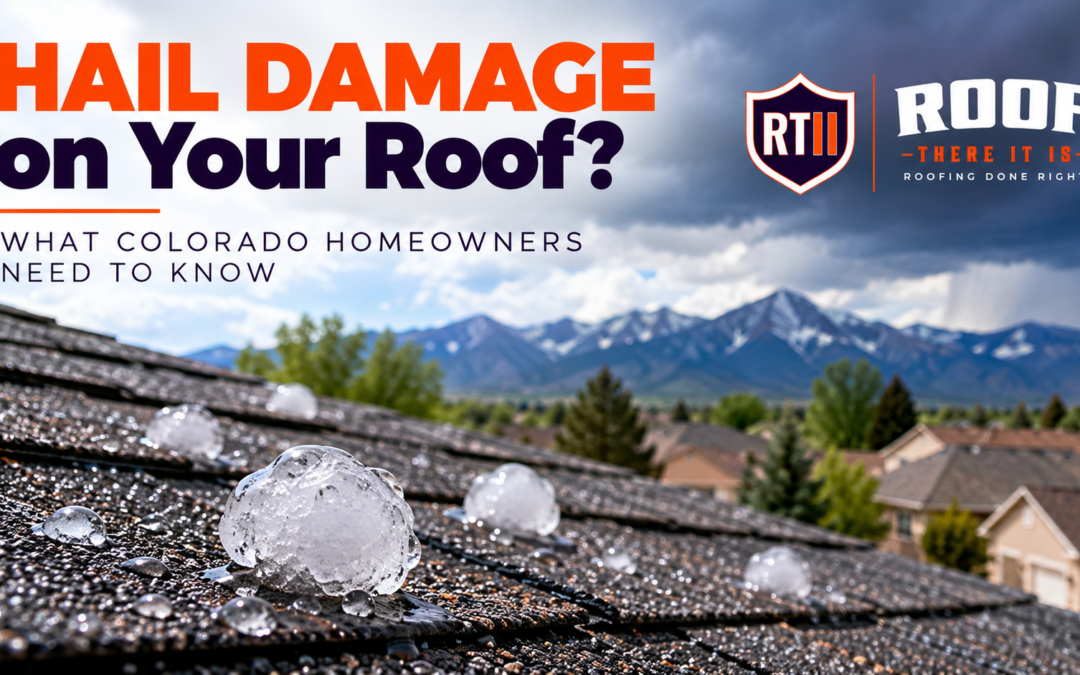
Roof hail damage in Colorado can be difficult to identify from the ground. Some hailstorms leave obvious signs of damage, while others can affect shingles, flashing, vents, and other roofing components without creating an immediate leak.
Colorado homeowners experience severe hailstorms every year. Colorado severe weather and hail reports show how hail and other severe weather regularly affect communities across the state, making it important for homeowners to understand what to look for after a storm.
Below, we’ll walk through the common signs of hail damage, what you can safely check yourself, and when it makes sense to have your roof professionally inspected.
What Does Hail Damage Look Like on a Roof?
Hail damage can look different depending on the size of the hail, wind speed, roofing material, age of the roof, and direction of the storm. On asphalt shingles, hail can knock protective granules loose or create impact marks that weaken the shingle.
Common signs of hail damage can include:
- Dark or bruised-looking spots on asphalt shingles
- Missing or loosened shingle granules
- Cracked or fractured shingles
- Dents in metal flashing, gutters, vents, or downspouts
- Damage to ridge caps and other exposed roofing components
- Pieces of roofing material around the property after a storm
Not every impact means the roof needs to be replaced. The severity, location, and overall condition of the roofing system all matter when determining whether a roof repair or replacement is appropriate.
Common Signs of Roof Hail Damage in Colorado
After a Colorado hailstorm, there are several areas of your home you can visually check without getting onto the roof. Damage to other exterior surfaces can be an indication that your roof may have been impacted as well.
Look for signs such as:
- Dented gutters and downspouts — Metal surfaces often show hail impacts more clearly than shingles.
- Damaged siding or window screens — Hail strong enough to damage these areas may also have affected the roof.
- Granules near downspouts — An unusual amount of shingle granules after a storm can indicate recent roof impacts.
- Damaged roof vents or flashing — Metal roofing components may show visible dents from hail.
- Missing or damaged shingles — High winds accompanying hailstorms can loosen, lift, or remove shingles.
- New water stains or leaks — Interior moisture after a storm should be investigated promptly.
Even if you don’t see obvious damage from the ground, that doesn’t necessarily mean the roof is unaffected. Some hail damage is difficult to identify without inspecting the roofing surface closely.
If your home was recently hit by hail, a professional hail damage roof inspection can help determine whether your roofing system was affected.
Can You See Hail Damage From the Ground?
Sometimes, but not always. Large or wind-driven hail may leave visible signs around your property, but roof damage itself can be difficult to evaluate safely from the ground.
You may be able to spot missing shingles, damaged gutters, dented downspouts, or debris around your home. However, smaller impact marks, granule loss, bruising, cracks, and damage to flashing or roof vents may require a closer inspection.
Avoid climbing onto your roof after a storm. Wet surfaces, loose shingles, and storm debris can create dangerous conditions.
If you’re unsure whether your roof was affected, Roof There It Is offers free roof inspections throughout Colorado. We’ll inspect the roofing system, explain what we find, and provide clear recommendations if repairs or replacement are needed — with no pressure or obligation.
How Does Hail Size Affect Roof Damage?
The size of hail is one factor that can influence the amount of damage a roof experiences, but it is not the only factor. Wind speed, storm direction, roof age, shingle type, and the condition of the roofing system can all affect how a roof responds to a hailstorm.
As hailstones increase in size, their potential to damage roofing materials generally increases. Smaller hail may cause little or no damage to a well-maintained roof, while larger hail can cause granule loss, bruising, cracking, and damage to vents, flashing, gutters, and other exterior components.
Colorado storms can also produce wind-driven hail. Strong winds can increase the force and angle of impact, which means two homes in the same neighborhood may experience very different levels of roof damage during the same storm.
That’s why the presence of hail alone doesn’t determine whether a roof needs repair or replacement. The roof itself should be evaluated based on its actual condition after the storm.
Does Hail Damage Mean You Need a New Roof?
No. Finding hail damage does not automatically mean your roof needs to be replaced. The right solution depends on the extent of the damage, the age and condition of the roofing system, the location of the impacts, and whether damaged areas can be reliably repaired.
In some cases, localized damage may be addressed with a roof repair. More widespread or significant damage may make a roof replacement the better long-term solution.
At Roof There It Is, our goal is to determine what your roof actually needs. We start with an inspection, document what we find, and explain the available options so you can make an informed decision about your home.
What Should You Do After a Hailstorm in Colorado?
After a hailstorm, you don’t need to make an immediate decision about repairing or replacing your roof. Start by checking your property for visible signs of storm damage and documenting anything unusual you notice. After severe weather, homeowners can also check the National Weather Service Denver/Boulder for official storm reports, warnings, and severe-weather information for Colorado’s Front Range.
A few practical steps include:
- Check your property from the ground for damaged gutters, downspouts, siding, screens, shingles, or other exterior components.
- Take photos of visible hail or storm damage around your property.
- Check inside your home for new water stains, moisture, or signs of a roof leak.
- Avoid climbing onto the roof to inspect it yourself.
- Schedule a professional roof inspection if you suspect the roof may have been affected.
- Keep your inspection findings and documentation so you have a clear record of the roof’s condition after the storm.
If you’re considering an insurance claim, review your policy and contact your insurance carrier or agent with questions about your coverage, deductible, deadlines, and claim process. A roofing contractor can inspect and document the physical condition of your roof, but questions about insurance coverage should be addressed by your carrier or licensed insurance professional.
When Should You Schedule a Roof Inspection After Hail?
If your home was in the path of a hailstorm, it can be helpful to have the roof inspected even when you don’t see obvious damage from the ground. Some hail impacts are difficult to identify without looking closely at the roofing materials and components.
You should consider scheduling an inspection if:
- Hail was reported in your neighborhood
- Your gutters, downspouts, siding, or other exterior surfaces show impact marks
- You notice missing shingles or roofing debris around your property
- You see unusual granule accumulation near your downspouts
- A new roof leak or interior water stain appears after the storm
- Nearby homes are being inspected or repaired following the same storm
- You’re simply unsure whether your roof was affected
A professional inspection can help establish the condition of your roof and determine whether any damage requires attention.
Are Class 4 Shingles Better for Colorado Hail?
Class 4 impact-resistant shingles are designed to provide a higher level of impact resistance than conventional asphalt shingles, making them a strong roofing option for Colorado homes exposed to frequent hailstorms.
These shingles are tested to recognized impact-resistance standards, but a Class 4 rating does not mean a roof is hail-proof. Hail size, wind speed, storm direction, roof age, and other conditions can still result in damage.
Roof There It Is installs premium Class 4 roofing options, including IKO Nordic shingles, which use polymer-modified asphalt and carry a Class 4 impact-resistance rating. For Colorado homeowners replacing an aging or storm-damaged roof, impact-resistant shingles are worth considering as part of the overall roofing system.
Depending on the insurance carrier and policy, some homeowners may also qualify for insurance-related benefits for installing qualifying impact-resistant roofing. Homeowners should confirm any available discounts or requirements directly with their insurance carrier or agent.
Get a Free Hail Damage Roof Inspection in Colorado
If your home was recently affected by a hailstorm—or you’re simply unsure whether your roof has damage—Roof There It Is can help.
We provide free hail damage roof inspections for homeowners throughout Colorado. We’ll evaluate your roofing system, document what we find, and explain whether your roof appears to need repair, replacement, or no immediate work at all.
Our goal is to give you clear information so you can make the right decision for your home, with no pressure or obligation.
Schedule your free roof inspection today and get clear answers about the condition of your roof.
Frequently Asked Questions About Roof Hail Damage in Colorado
How soon after a hailstorm should I have my roof inspected?
You can schedule an inspection once the storm has passed and conditions are safe. If your property experienced significant hail or you notice signs of exterior damage, having the roof inspected sooner can help you understand its condition and identify issues that may need attention.
Can a roof have hail damage without leaking?
Yes. Hail can damage shingles and other roofing components without causing an immediate leak. Some damage may affect the protective surface of the roofing system and become more noticeable over time.
What size hail can damage a roof?
There is no single hail size that guarantees roof damage. The potential for damage depends on hail size, wind speed, storm direction, roofing material, roof age, and the condition of the roofing system. Larger and wind-driven hail generally creates greater potential for damage.
Should I file an insurance claim before having my roof inspected?
You don’t necessarily need to file a claim before having your roof inspected. A roof inspection can help you understand the physical condition of your roofing system. Questions about whether damage is covered or whether you should file a claim should be discussed with your insurance carrier or agent.
Can hail damage be repaired without replacing the entire roof?
Sometimes. Localized hail damage may be repairable depending on the condition and age of the roof, availability of compatible materials, and extent of the affected area. More widespread damage may make roof replacement a better long-term solution.
What does hail damage look like on asphalt shingles?
Hail impacts may appear as areas of granule loss, dark or bruised-looking spots, cracks, fractures, or other changes to the shingle surface. Some damage can be difficult to identify from the ground, which is why a professional inspection can be helpful after a significant storm.
Are Class 4 shingles hail-proof?
No. Class 4 impact-resistant shingles are designed and tested to provide greater impact resistance than conventional asphalt shingles, but they are not hail-proof. Severe hail can still damage an impact-resistant roofing system.
Roof Inspections Across Colorado
Roof There It Is provides roof inspections for homeowners throughout Colorado, including communities that experience very different hail and weather patterns. From the Front Range to Cortez and Southwest Colorado, our team helps homeowners identify potential roof damage and understand when repairs or replacement may be needed.
Does Roof There It Is provide free hail damage inspections?
Yes. Roof There It Is provides free roof inspections for Colorado homeowners who are concerned about hail or storm damage. We’ll inspect the roofing system, explain what we find, and provide clear recommendations with no pressure or obligation.